Have you noticed how frequently the UI UX design or interface of your favourite social media apps like Instagram, Facebook, Twitter, or Snapchat changes? The continuous changes are somehow frustrating. Still, there are a staggering 4.80 billion active social media users worldwide as of April 2023. According to the research conducted by Datareportal, that’s 59.9% of the total global population.
The Impact of Social Media on UI UX Design: What You Need to Know
This is how powerful and influential social media is!
Just recently, Threads, a ground-breaking social media app launched by Meta in July 2023, skyrocketed to over 100 million users in less than five days solidifying its place as one of the fastest-growing apps in history.
The impact of social media on our lives is undeniable. It shapes our decisions whether it’s related to our profession, education, passions, or beyond. However, what you may not realize is the profound impact social media has on the world of UI UX design.
With a new social media app emerging every day and billions of people eagerly signing up, have you ever wondered what makes these platforms so popular? Today, in this article, we’re going to unlock the secrets by exploring the impact of social media on UI/UX design and studying the elements that drive a social media app toward success through its UI UX design strategy.
The Importance of UI UX Design for social media success
Social media and UI UX design are interlinked in deeply with each other and the UI UX design of a social media app plays a significant role in the success of the app. Just look at how Threads performed!
Within a mere 5 days, Threads with Instagram as its parent app skyrocketed to popularity and the secret behind its rapid success lies in its strikingly familiar interface reminiscent of the widely acclaimed Twitter. Not only does this remarkable app boast a visually reminiscent interface, but its exceptional user experience sets it apart.
With a unique offering of allowing users to compose text posts of up to 500 characters, surpassing Twitter’s 250-character limit, it amplifies the power of expression and elevates the overall experience to unprecedented heights. Moreover, you can share photos, videos, and stories with a select group of friends and the app also includes features like disappearing messages and location sharing. The reason of
If we analyze, it’s obvious that the factors that contributed to its popularity the most include its focus on privacy, it’s simple design, and its integration with Instagram.
Back to the frequent design changes that you encounter while using social media apps, at first glance, these UI/UX design choices may appear perplexing or even frustrating to users.
However, it’s important to remember that behind every decision lies a purpose. UI UX design is a continuous and iterative process, and designers meticulously craft their creations with careful consideration and thoughtful intent. They understand that user experience is not solely about immediate gratification but rather about achieving long-term satisfaction and usability.
So, while it may be tempting to dismiss certain design elements as annoying, you’ll understand the reasons behind these choices and discover the hidden brilliance that UI/UX designers bring to the table. We will show you in this article how different elements and varying changes in the applications you use add to your experience. Just wait a little bit, we’re about to explain them.
How is social media changing UI UX design?
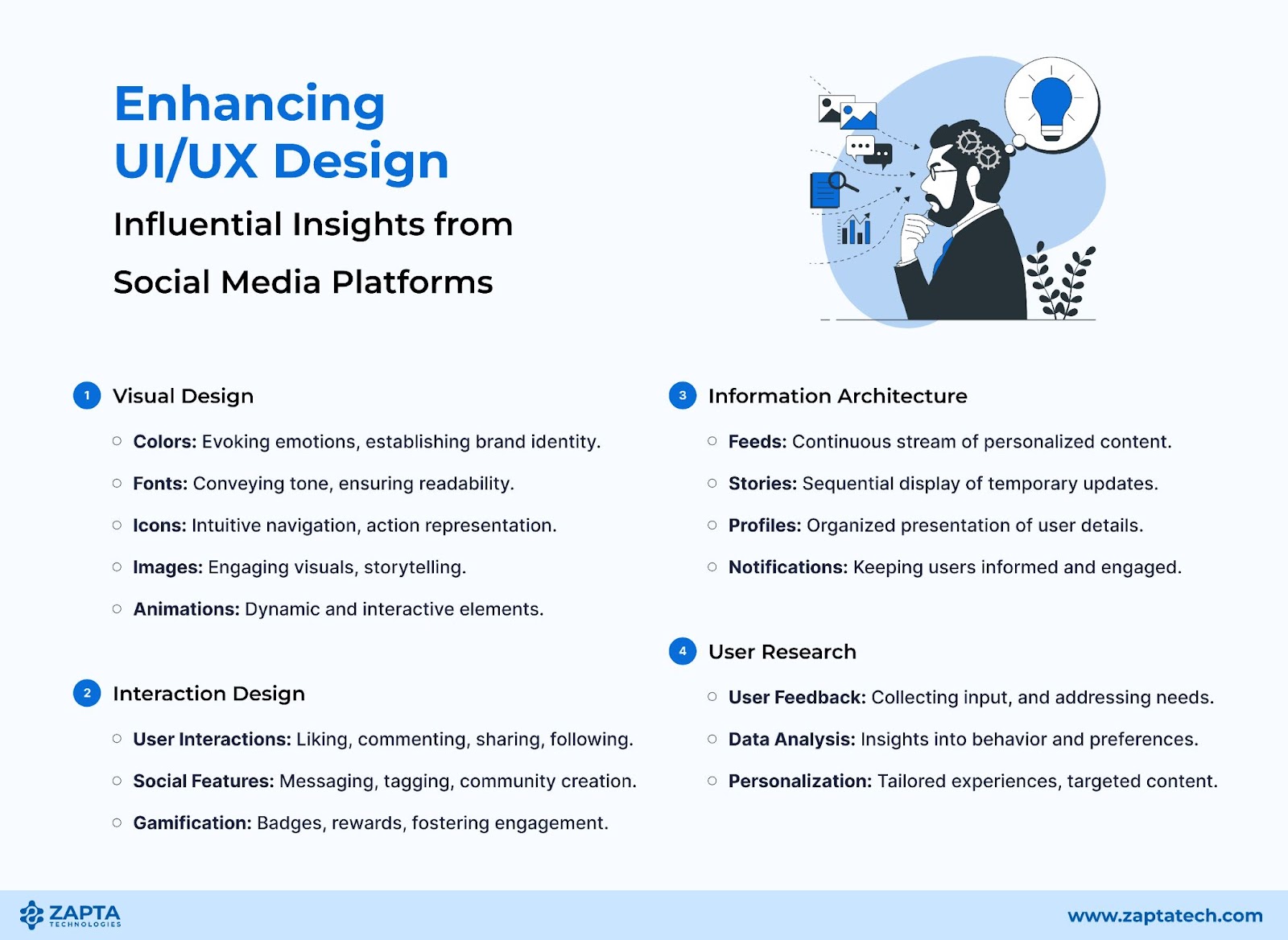
There are specific aspects of UI UX design that social media significantly influences like visual design, interaction design, information architecture, and user research. For each aspect, we’ll provide you with some examples so you can understand this concept better. Let’s begin;
Impact of Social Media On Visual Design
Social media platforms possess attractive and consistent interfaces that engage users and promote brand recognition by using colours, fonts, icons, images, and animations to enhance the user experience and convey their brand identity. This is how social media impacts the visual design of the social media apps you use.
You must have noticed how each social media platform has a distinct colour scheme. Choosing a specific colour helps it establish a brand identity and creates visual cohesion through its interface, which is also reflected in the customizations users can make when they create a profile picture.